
Ferrets may not spend hours grooming themselves like cats, but that doesn’t mean they need a complicated beauty routine either.
In fact, when it comes to ferret grooming, less is often more.
A healthy ferret normally takes care of much of its own coat maintenance. What your ferret really needs from you is help with things like nail trimming, shedding, dental care and occasionally cleaning those surprisingly waxy little ears.
And what about that famous ferret smell?
Bathing your ferret every week isn’t the answer!
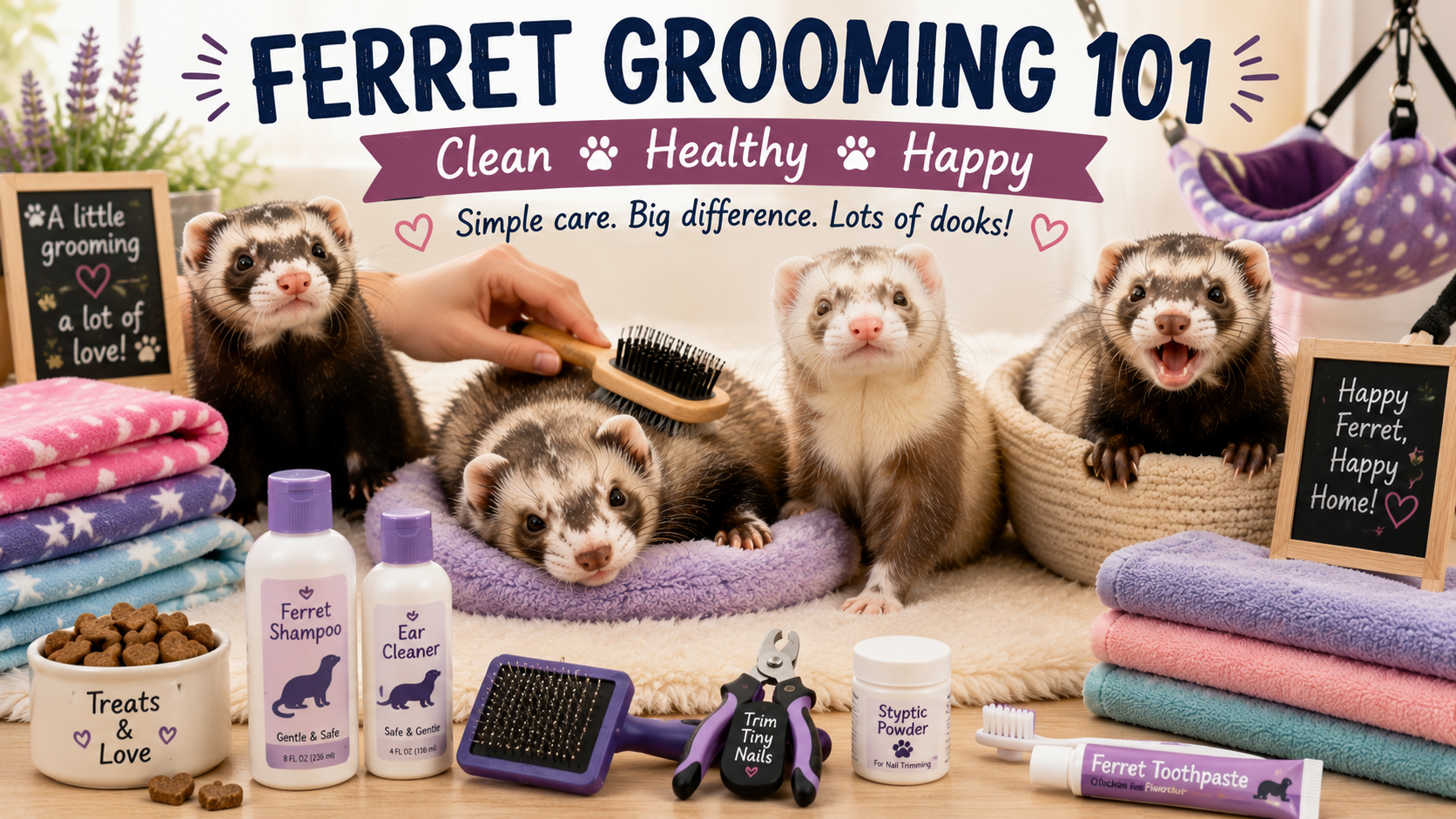
Here’s what you actually need to keep your ferret clean, comfortable and looking its best.
1. Ferret or Small-Animal Shampoo — For Occasional Baths
One of the biggest misconceptions about ferret grooming is that ferrets need frequent baths.
They generally don’t.
Too much bathing can dry and irritate the skin and strip away natural oils from the coat.
And if you’re bathing your ferret because of its natural musky odor, frequent bathing may not solve the problem.
For most healthy ferrets, baths should be occasional rather than part of a weekly grooming schedule.
A bath may be helpful when your ferret has genuinely gotten dirty or has something on its coat that needs to be removed.
When a bath is necessary, use a gentle product appropriate for ferrets or small animals and rinse thoroughly.
Avoid strongly scented products.
Your ferret doesn’t need to smell like a tropical coconut.
It needs healthy skin.
2. Nail Clippers — An Essential Ferret Grooming Tool
If there’s one grooming item every ferret owner should have, it’s a good pair of nail clippers.
Ferret nails grow continuously and need regular attention.
Overgrown nails can:
- Catch in blankets and hammocks
- Become uncomfortable
- Make walking more difficult
- Potentially tear if snagged
Small pet nail clippers or human fingernail clippers can work well.
Watch Out for the Quick
Look closely at a ferret’s nail and you’ll usually see a pink area running through part of it.
That’s the quick, which contains blood vessels and nerves.
Only trim the clear tip beyond the quick.
If you’re new to trimming ferret nails, take off a small amount at a time.
It’s also a good idea to keep styptic powder nearby in case you accidentally nick the quick.
3. A Soft Brush or Grooming Tool
Ferrets shed, particularly when changing between seasonal coats.
During heavier shedding periods, you’ll probably notice loose fur on:
- Hammocks
- Blankets
- Furniture
- Your clothes
- And somehow everywhere else in the house
A soft brush or gentle grooming tool can help remove loose hair.
Some ferrets love being brushed.
Others will look at you as though you’ve introduced a completely unreasonable new household rule.
Keep grooming sessions short and gentle.
4. Ferret-Safe Ear Cleaner
Ferrets can produce a surprising amount of dark earwax.
Some wax is normal.
Periodically check the outer portion of your ferret’s ears and clean them when necessary using an ear-cleaning product recommended for ferrets or small animals.
Be gentle and don’t push cotton swabs or other objects deep into the ear canal.
You can use a soft cotton pad or gauze to wipe away debris you can easily see around the outer ear.
When Dirty Ears May Be More Than Dirty Ears
Excessive dark debris, scratching, head shaking, redness, odor or irritated ears can sometimes indicate a problem such as ear mites or an ear infection.
That’s different from routine grooming and deserves veterinary attention.
5. Ferret Toothbrush & Pet-Safe Toothpaste
Those tiny ferret teeth need attention too.
Ferrets can develop plaque, tartar and other dental problems.
A small, soft toothbrush can be used to gently clean the teeth.
Most importantly:
Never use human toothpaste on a ferret.
Use a toothpaste intended for pets and appropriate for your ferret.
Starting dental care while a ferret is young can make the process considerably easier.
An older ferret who has never experienced a toothbrush may initially have a somewhat different opinion about your wonderful new dental-care program.
Patience helps.
6. Styptic Powder
This isn’t technically a grooming tool you’ll use every time, but it’s something I like having nearby when trimming nails.
If you accidentally cut a nail too short and hit the quick, styptic powder can help stop minor bleeding.
Keep it with your nail clippers so you don’t have to search for it when you need it.
It’s one of those supplies you hope you rarely need—but you’re glad to have it.
7. Clean Hammocks, Blankets & Bedding
Here’s a grooming tool that isn’t really a grooming tool at all.
The washing machine.
Keeping your ferret’s environment clean can make a surprisingly big difference.
Ferret bedding absorbs natural body oils and odor.
Regularly washing:
- Hammocks
- Blankets
- Sleep sacks
- Cage liners
- Other washable bedding
helps keep the environment fresh without repeatedly bathing the ferret.
Also keep litter boxes and sleeping areas clean.
If you’re trying to control ferret odor, cleaning the environment is usually much more useful than constantly bathing the ferret.
Do Ferrets Need Conditioner?
Usually, no.
A healthy ferret shouldn’t routinely need shampoo followed by conditioner.
If your ferret has unusually dry, flaky or irritated skin, rather than simply adding more grooming products, consider why it’s happening.
Dry skin or coat changes can sometimes be related to environmental conditions, parasites, nutrition or health issues.
Persistent skin or coat problems should be discussed with a veterinarian.
How Often Should You Groom a Ferret?
There isn’t one schedule that works perfectly for every ferret.
A simple routine might look something like this:
Every week:
Check nails, ears, teeth, skin and coat.
As needed:
Trim nails and gently remove loose fur.
During shedding season:
Brush more frequently and wash bedding regularly.
Occasionally:
Bathe only when your ferret actually needs it.
The important thing isn’t following an exact calendar.
It’s getting into the habit of looking your ferret over regularly.
That gives you an opportunity to notice small changes before they become big ones.
Grooming Is Also a Mini Health Check
One of the best things about regular grooming is that it gives you a chance to examine your ferret closely.
While grooming, look for anything unusual:
- Lumps or bumps
- Hair loss
- Red or irritated skin
- Excessive scratching
- Unusual ear debris
- Broken or overgrown nails
- Dental problems
- Changes in the coat
- Areas that seem painful or sensitive
You know what your ferret normally looks and feels like.
That makes you one of the first people likely to notice when something changes.
The Basic Ferret Grooming Kit
You don’t need a cabinet overflowing with specialized ferret beauty products.
A practical grooming kit can be quite simple:
- Small nail clippers
- Styptic powder
- Soft grooming brush
- Ferret-appropriate ear cleaner
- Cotton pads or gauze
- Small soft toothbrush
- Pet-safe toothpaste
- Gentle shampoo for occasional use
Keep everything together in a small container and your ferret grooming supplies will always be ready when you need them.
A Clean Ferret Doesn’t Have to Smell Like Shampoo
Ferrets naturally have a musky scent.
That’s part of being a ferret.
Rather than trying to eliminate every trace of their natural smell with frequent baths and scented products, concentrate on what really matters:
Clean bedding, clean litter boxes, healthy skin, trimmed nails, clean ears and good dental care.
Your ferret may never smell like a bouquet of roses.
And that’s perfectly okay.
He’s a ferret.
With a simple grooming routine and regular health checks, you can help keep that mischievous little coat soft, comfortable and ready for the next weasel war dance.
Updated August 2026. This article provides general ferret-care information and isn’t a substitute for veterinary advice. Consult a veterinarian experienced with ferrets about persistent skin, ear, dental or grooming-related problems.



Leave a Reply