
Choosing a cage is one of the first big decisions you’ll make when bringing home a ferret.
And if you’ve ever watched a ferret play, you already know why cage design matters.
Ferrets climb.
They dig.
They squeeze.
They investigate.
And if there’s a door, latch or opening that looks even remotely escapable, there’s a good chance your ferret will eventually investigate that too.
A good ferret cage should provide a safe and comfortable home base for sleeping, eating and relaxing—but it should never be your ferret’s entire world.
Here’s what I look for when choosing a cage for ferrets.
My Favorite Style: A Large Multi-Level Ferret Cage
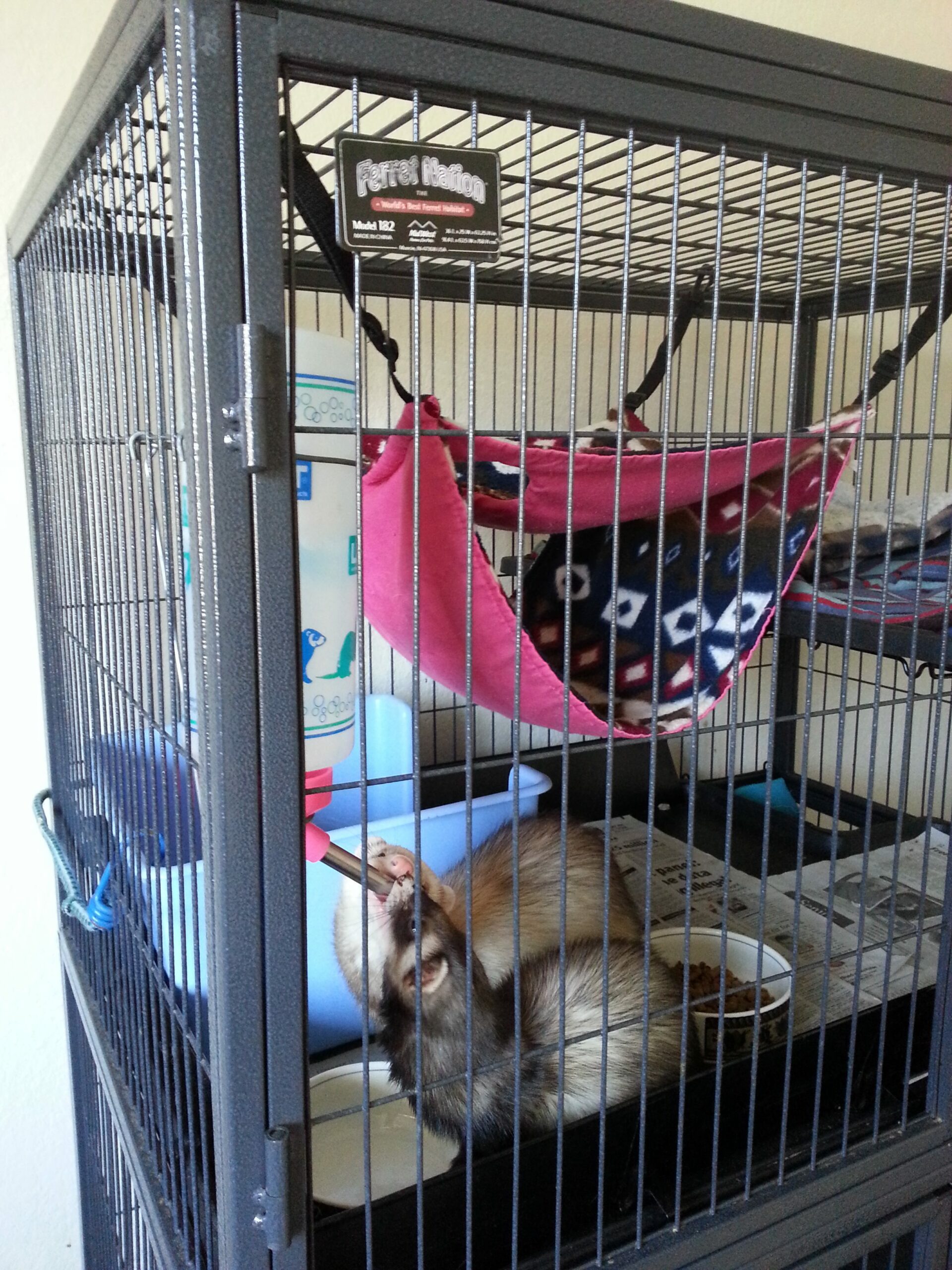
For most homes, I prefer a large, sturdy multi-level metal cage designed specifically for ferrets or similar small animals.
One of the most popular examples is the Ferret Nation cage from MidWest Homes for Pets.
There’s a reason this style has remained popular with ferret owners.
Large front doors make it much easier to:
- Reach your ferrets
- Remove litter boxes
- Change hammocks
- Wipe down shelves
- Rearrange bedding and toys
- Clean the entire cage
If you’ve ever tried cleaning a large cage through one tiny door, you’ll appreciate this feature very quickly.
Ferret Nation vs. Critter Nation
These two cages look very similar, but there is an important difference.
Ferret Nation cages use wider horizontal bar spacing and are designed with ferrets in mind.
Critter Nation cages have narrower bar spacing and were designed to accommodate smaller animals as well.
Both are roomy cage systems, but for a typical adult ferret, I’d generally start by looking at Ferret Nation.
For very small ferrets or young kits, always check the actual bar spacing and make absolutely certain the animal cannot squeeze through.
If you’re wondering whether a ferret can fit through an opening…
Never underestimate the ferret.
Single-Level or Double-Level Cage?
If you have the room, a double-level cage gives you much more flexibility.
You can create different areas for:
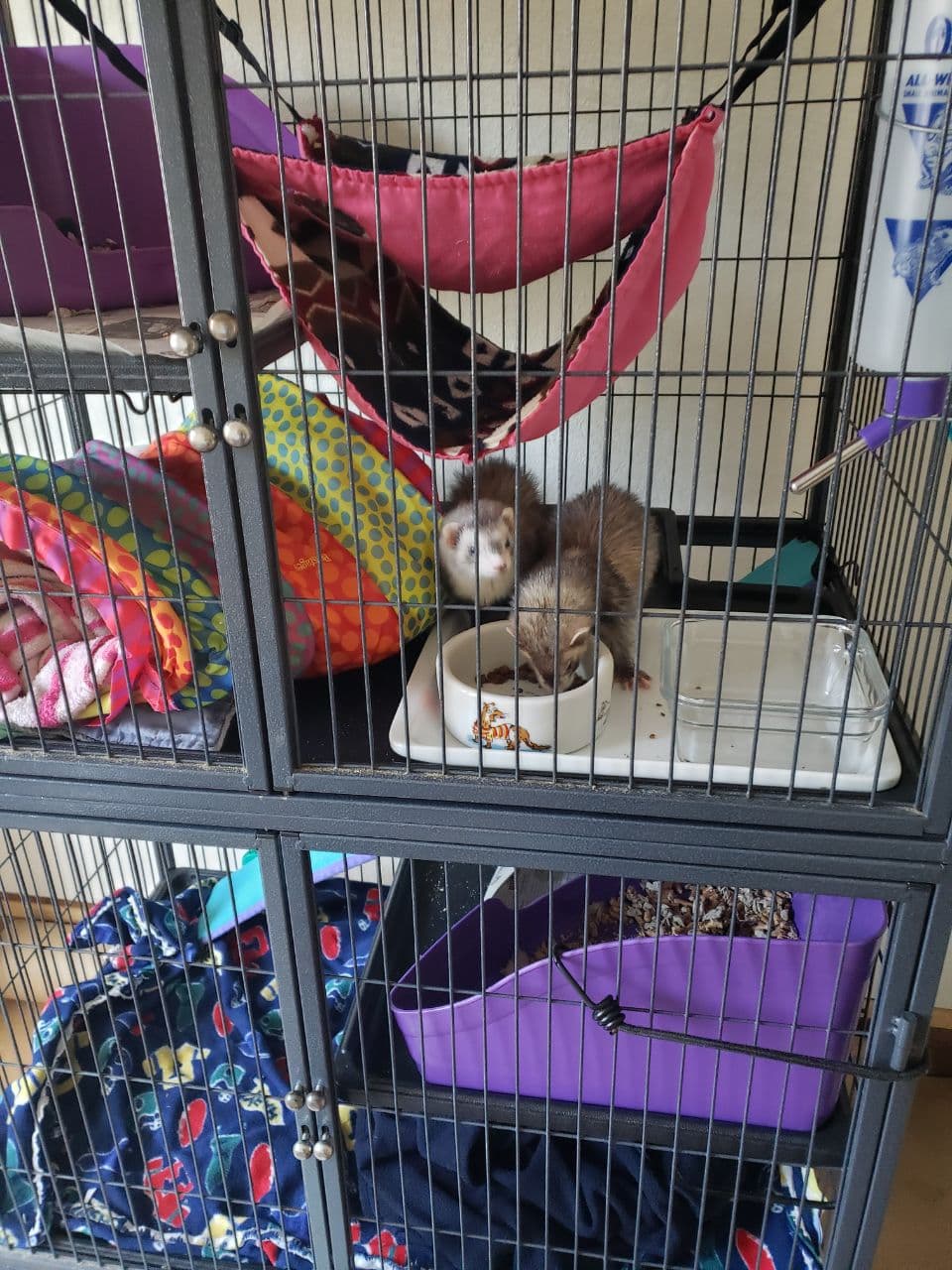
Sleeping: hammocks, blankets and sleep sacks.
Bathroom: litter boxes or pads.
Food and water: bowls positioned away from the litter area.
Activity: tunnels, safe toys and additional hammocks.
Multiple ferrets also benefit from having several sleeping locations.
Of course, there’s no guarantee they’ll use them.
You can provide four beautiful hammocks and still discover every ferret piled into the same one.
That’s ferret logic.
What Should You Look for in a Ferret Cage?

1. Plenty of Usable Space
Ferrets need room to move around comfortably.
Don’t judge a cage only by its height. Look at the amount of usable floor and shelf space as well.
A tall cage with tiny shelves isn’t necessarily better than a well-designed cage with large platforms.
The more ferrets sharing the cage, the more important adequate space becomes.
2. Solid Floors
Ferrets should have solid surfaces to stand and walk on.
Avoid cages that require your ferret to spend significant time walking directly on bare wire flooring.
Solid pans and shelves are more comfortable and easier to cover with washable liners or bedding.
3. Safe Ramps
Multi-level cages should have secure ramps that aren’t excessively steep or slippery.
This becomes particularly important for older ferrets or animals with mobility problems.
Adding ramp covers can provide extra traction and make them more comfortable.
4. Large Doors
This feature is easy to underestimate until it’s cleaning day.
Large doors make everything easier.
You can reach corners, remove accessories and thoroughly clean the cage without performing gymnastics through a tiny opening.
For me, full-width doors are one of the best features a ferret cage can have.
5. Secure Latches
Ferrets are clever.
Some are very clever.
A cage door that seems secure to you may simply look like an interesting puzzle to a determined ferret.
Make sure doors latch securely and check them periodically.
If your ferret starts paying suspiciously close attention to a latch, pay attention.
He’s probably working on something.
6. Easy-to-Clean Surfaces
Ferret cages require regular cleaning, so choose one that makes the job easy.
Removable pans, washable liners and large doors can save considerable time.
Avoid complicated designs with lots of inaccessible corners where food, litter and debris can collect.
What Should Be Inside a Ferret Cage?

Once you’ve chosen the cage, it’s time for the fun part—decorating it for your ferrets.
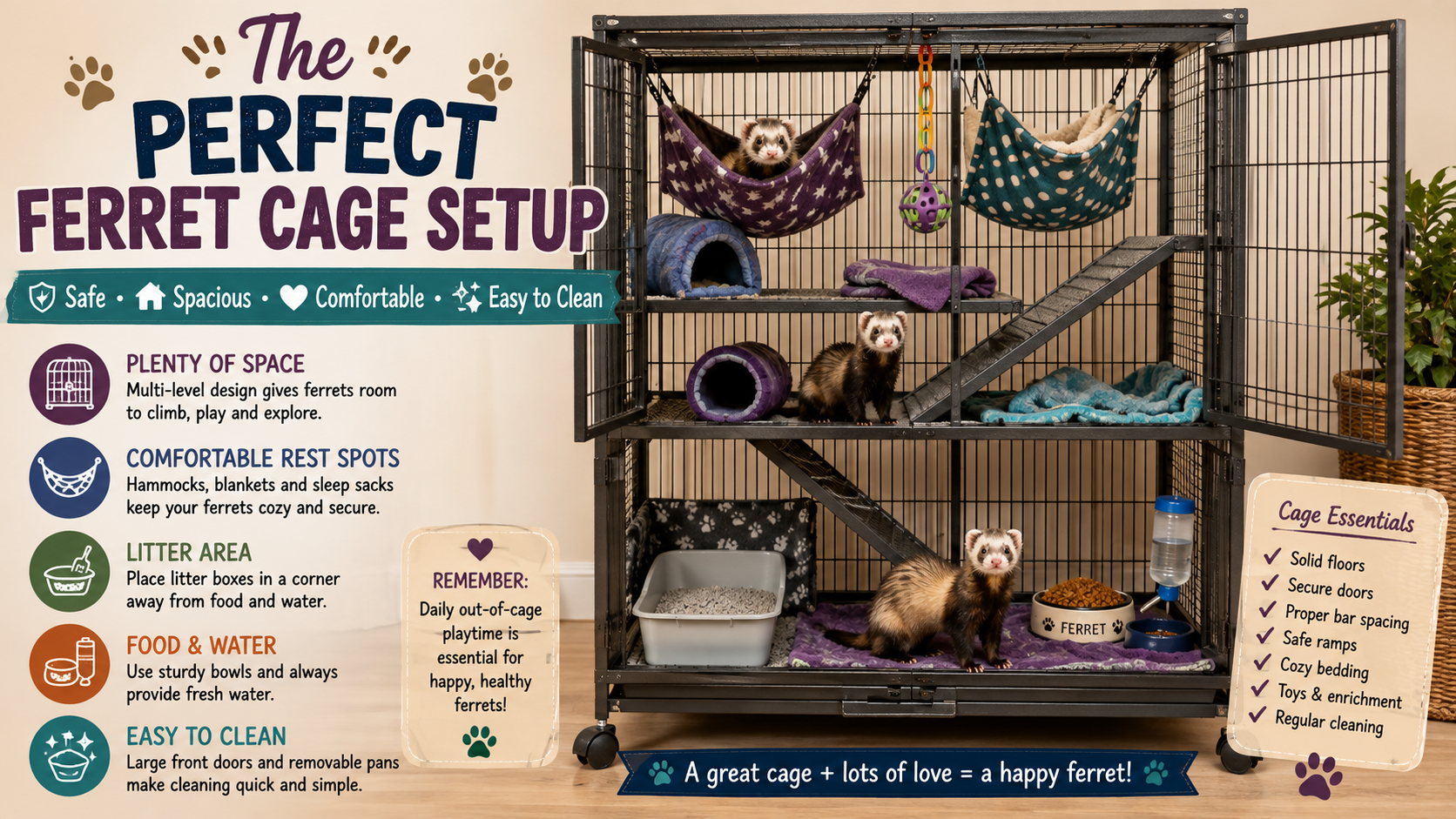
A comfortable setup can include:
- Several hammocks
- Soft blankets or sleep sacks
- Litter boxes
- Heavy food bowls
- Fresh water
- Washable cage liners
- Safe tunnels
- A few appropriate toys
Ferrets generally love enclosed sleeping spaces, so hammocks and sleep sacks are particularly popular.
Just inspect fabric items regularly.
If they become badly chewed, frayed or damaged, replace them.
Where Should You Put the Litter Box?
Ferrets often prefer using corners for their bathroom.
Place a litter box in a corner your ferret naturally chooses whenever possible.
The litter box should be large enough for the ferret to get its entire body inside.
Keep food and water away from the bathroom area.
If you have a large multi-level cage, you may find that more than one litter box works better.
Food and Water Bowls
Ferrets have an impressive ability to rearrange their surroundings.
That includes bowls.
Heavy ceramic bowls or securely attached bowls can help prevent your ferret from turning dinner into an interior-design project.
Fresh water should always be available.
What About Plastic Ferret Cages?
I wouldn’t choose a mostly plastic enclosed cage as my first option for permanent ferret housing.
Ventilation, usable space and durability are important.
Plastic components such as pans and shelves can be perfectly useful, but the overall enclosure should provide excellent airflow.
For most situations, I prefer a sturdy metal cage with solid shelves and pans.
What About Outdoor Ferret Cages?
I would not recommend an outdoor enclosure as the primary everyday home for a typical pet ferret.
Ferrets are vulnerable to temperature extremes, particularly heat, and outdoor housing introduces additional concerns involving predators, escape, insects and weather.
Supervised outdoor time can be wonderful under appropriate conditions.
A secure harness, ferret-safe play area or properly designed enclosure can give a ferret an opportunity to explore outdoors.
But that’s very different from simply putting a cage in the backyard.
Never leave a ferret outdoors in hot weather or direct sun.
How Many Ferrets Can Live in One Cage?

There’s no magic number based solely on cage dimensions.
You need to consider the size of the cage, number and size of the ferrets, sleeping areas, litter facilities and how much time the animals spend outside the cage.
As the number of ferrets increases, so does the need for:
- More usable space
- More hammocks
- More litter areas
- More frequent cleaning
A bonded group may happily sleep together, but they should still have enough room to separate when they want to.
A Cage Doesn’t Replace Playtime
This is probably the most important part of the entire article.
Even the best ferret cage isn’t a substitute for time outside the cage.
Ferrets need opportunities every day to run, explore, play and interact.
Think of the cage as your ferret’s:
Bedroom + dining room + bathroom + safe place.
The rest of the ferret-proofed home is where the real adventures happen.
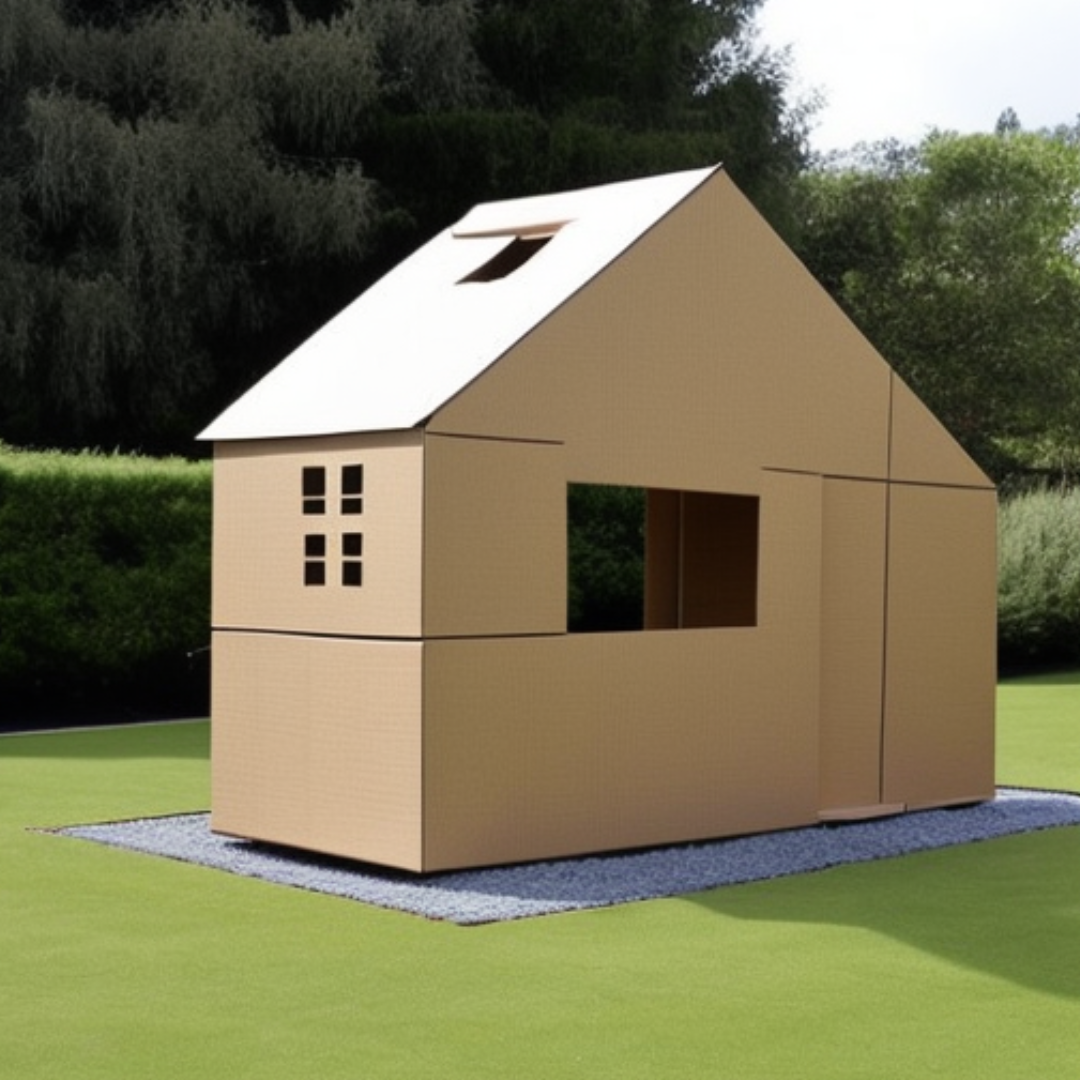
Tunnels, cardboard boxes, blankets and supervised exploration provide the mental and physical activity ferrets need.
Don’t Forget to Ferret-Proof the Room
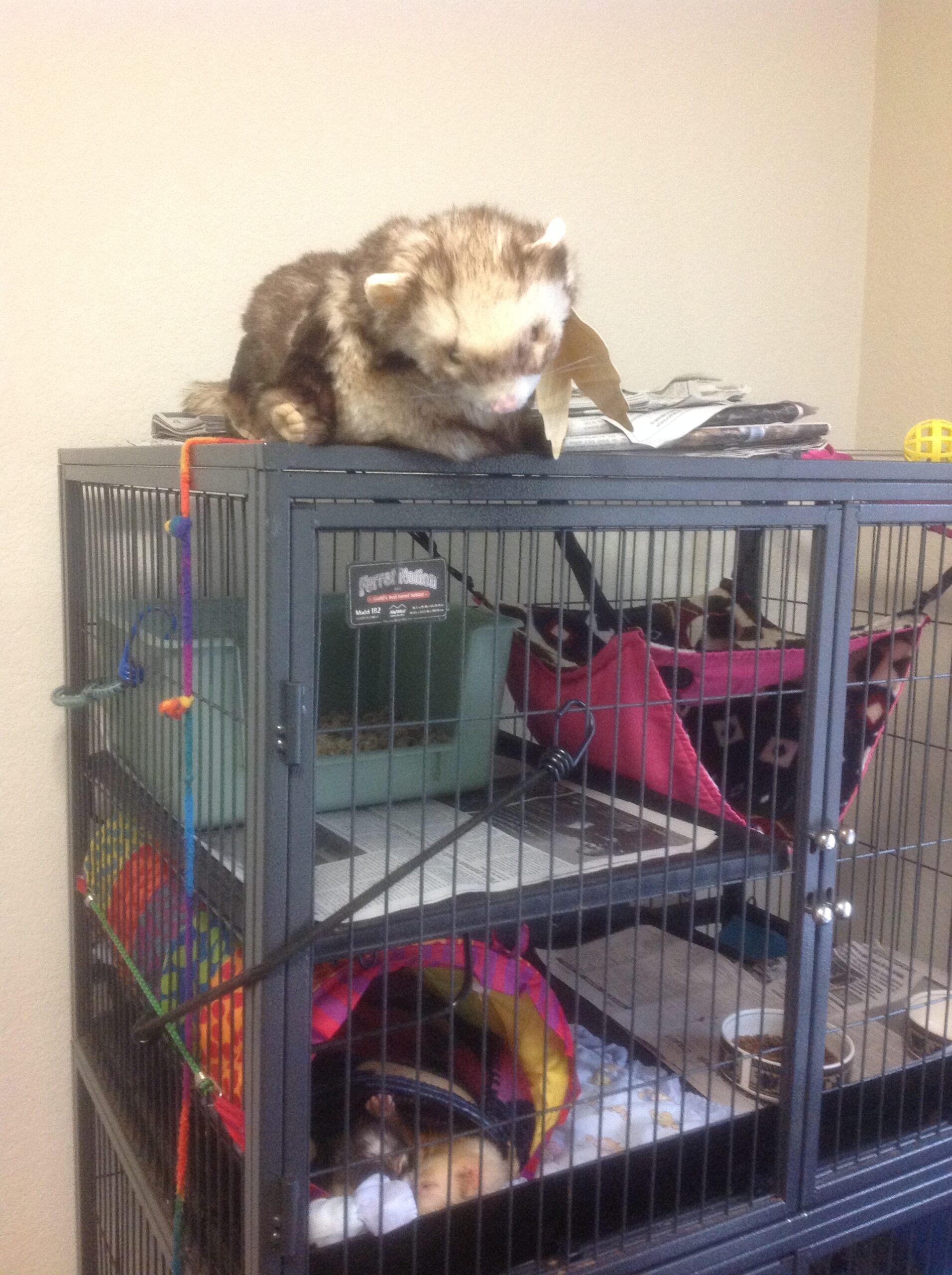
plush4
A fantastic cage doesn’t help much if your ferret escapes during playtime and crawls somewhere dangerous.
Before letting a ferret explore, check for:
- Holes around cabinets
- Open vents
- Recliners and sofa mechanisms
- Gaps behind appliances
- Accessible electrical cords
- Rubber or foam objects that could be chewed
- Open doors or windows
- Small spaces leading into walls or cabinets
Get down near floor level and look at the room from a ferret’s perspective.
You’ll probably discover things you never noticed while standing up.
What Is the Best Ferret Cage?
For many ferret owners, I think a large, sturdy multi-level metal cage with solid floors, secure doors and plenty of usable space is the most practical choice.
The Ferret Nation style checks many of those boxes and remains one of the cage designs I’d look at first.
But the cage itself is only the beginning.
Fill it with comfortable sleeping areas.
Keep it clean.
Provide fresh food and water.
Give your ferrets plenty of supervised time outside it.
And remember:
The best ferret home isn’t simply a great cage—it’s a safe environment with plenty of opportunities to sleep, play, explore and be a ferret.
Updated August 2026. Always check current cage dimensions, bar spacing and manufacturer recommendations before purchasing, particularly for young or unusually small ferrets.