
You could hike through California’s Sierra Nevada for years and never see one.
They’re small, incredibly fast and remarkably good at disappearing into rocks, brush and snow.
But hidden among the forests, mountain meadows and rugged high country of the Sierra Nevada live some fascinating members of the weasel family.
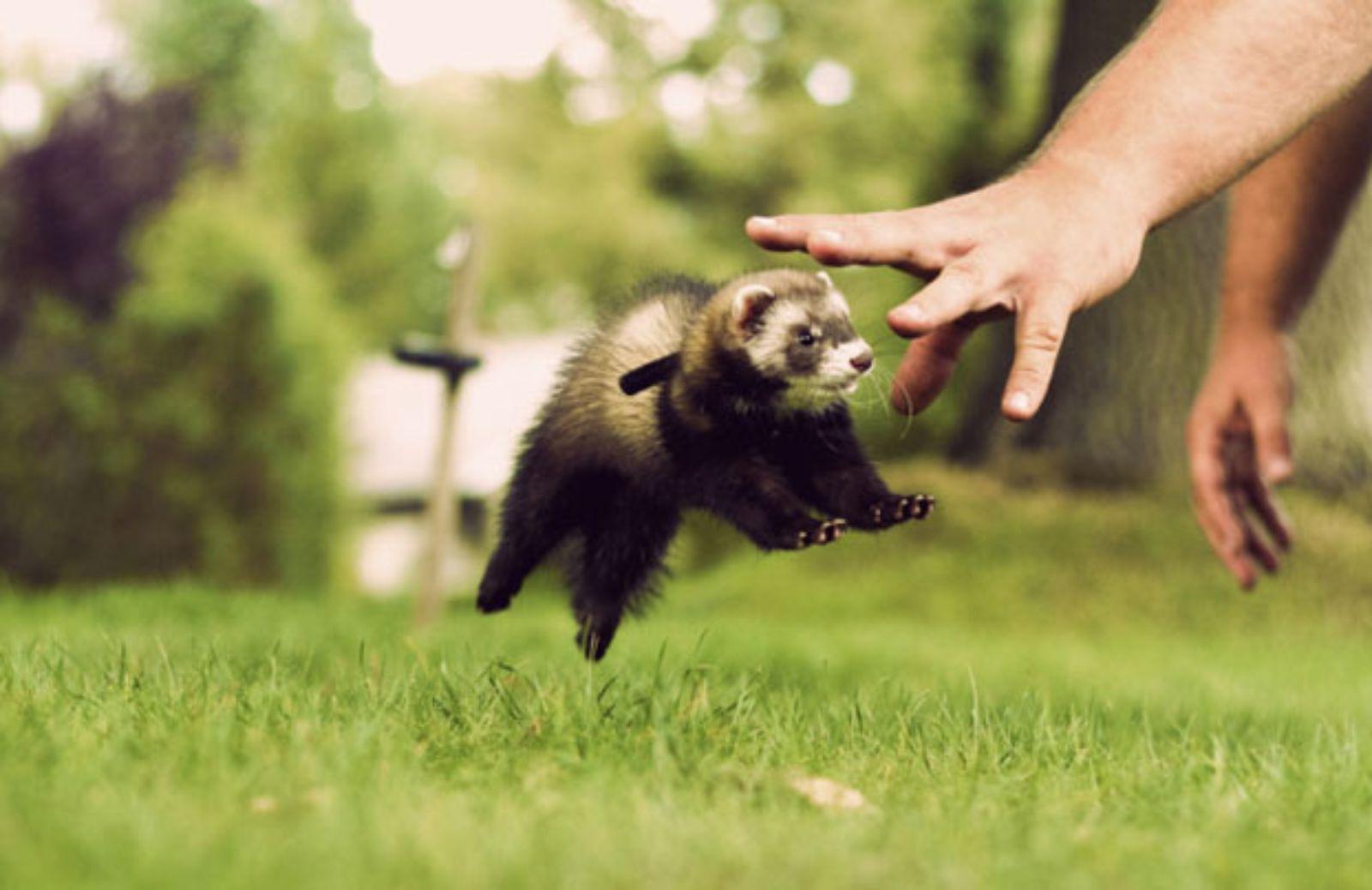
If you love ferrets, these animals may look strangely familiar.
That’s because domestic ferrets and weasels belong to the same animal family—the Mustelidae—a remarkable group of carnivores that also includes otters, mink, martens, badgers and wolverines.
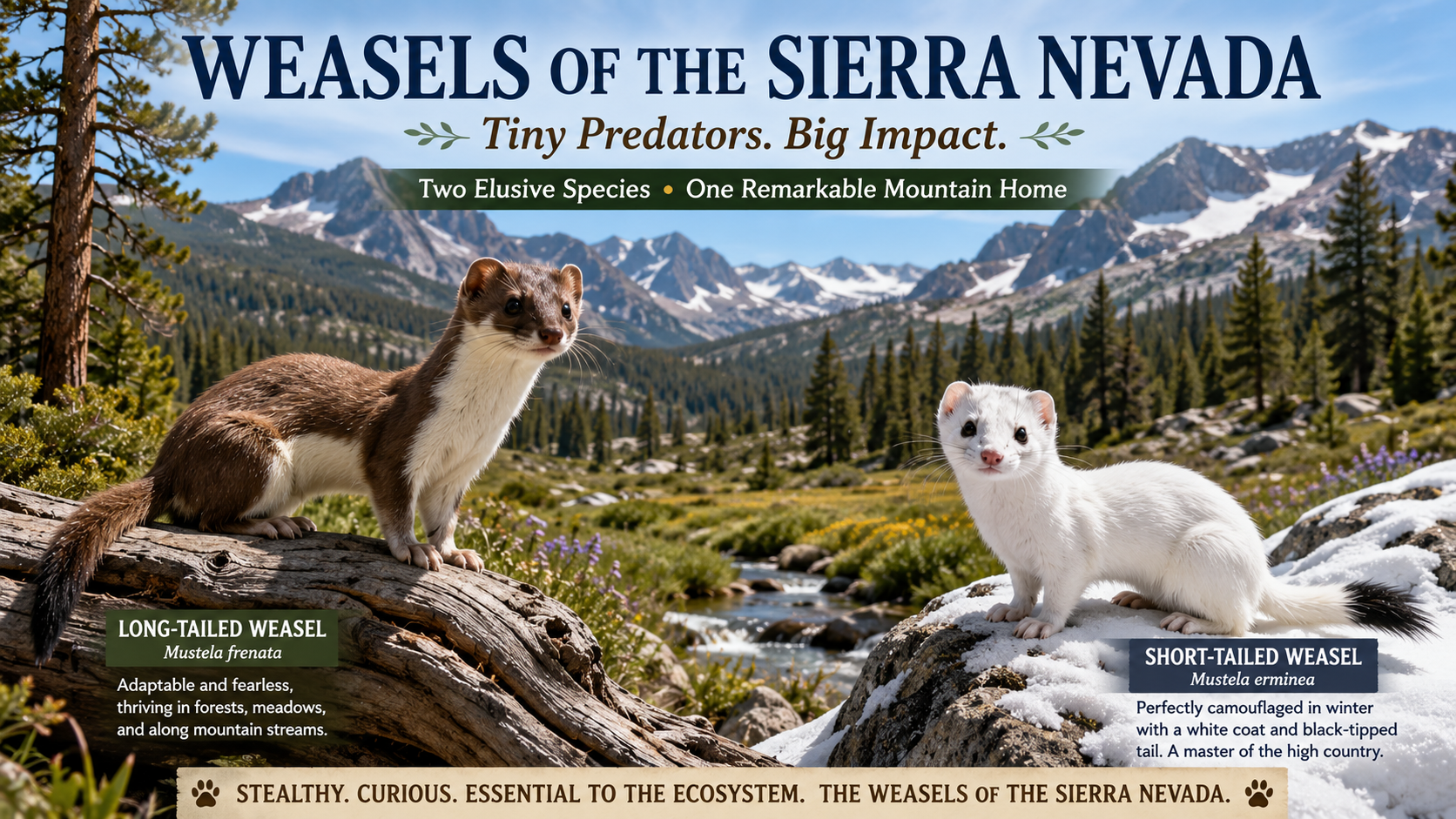
Two particularly interesting weasels found in California’s Sierra Nevada are the long-tailed weasel and the ermine, or short-tailed weasel.
Let’s meet them.
The Long-Tailed Weasel: Small Body, Serious Hunter
The long-tailed weasel is one of those animals that looks adorable until you remember that you’re looking at a highly efficient little predator.
Long-tailed weasels have elongated bodies, short legs and—as the name suggests—a relatively long tail.
That body shape isn’t unlike the one we see in our domestic ferrets.
It serves an important purpose.
A long, narrow body allows a weasel to pursue small prey into burrows and other tight spaces that larger predators simply can’t enter.
What Do Long-Tailed Weasels Eat?
Long-tailed weasels primarily hunt small animals.
Their diet can include:
- Mice
- Voles
- Ground squirrels
- Other small mammals
- Birds
- Eggs
- Occasionally other available prey
Don’t let their size fool you.
These are energetic, persistent predators capable of taking prey surprisingly large relative to their own body size.
Where Do Long-Tailed Weasels Live?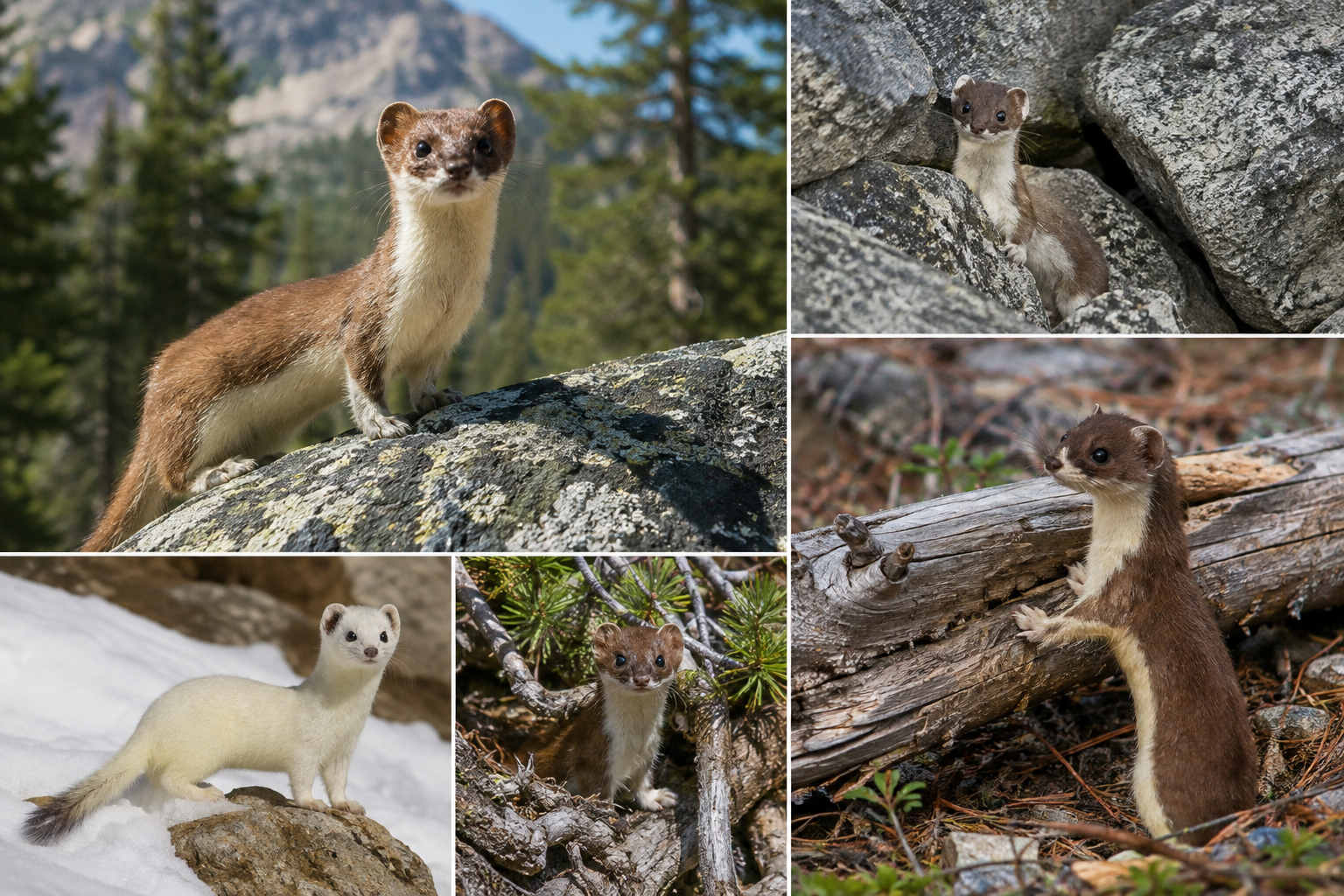
One reason long-tailed weasels are successful is their adaptability.
They can occupy a variety of environments, including forests, meadows, brushy areas and locations near water.
They are even detected in the Sierra Nevada’s harsh high-elevation environment.
California wildlife researchers use remote cameras to study carnivores living at elevations above 10,000 feet in parts of the Sierra Nevada, and long-tailed weasels are among the species detected in this challenging alpine landscape.
That’s quite an accomplishment for such a small animal.
The Ermine: A Weasel Built for Winter
The Sierra Nevada is also home to another beautiful little predator: the ermine, traditionally called the short-tailed weasel.
Like the long-tailed weasel, the ermine has the classic mustelid body shape—long, slender and built for pursuing prey into tight spaces.
But one of its most remarkable characteristics appears when winter arrives.
From Brown to White
In areas with snowy winters, an ermine’s coat can change dramatically with the seasons.
During warmer months, the animal generally has brown coloration above with a much lighter underside.
As winter approaches, the coat can become white.
Against a snowy Sierra Nevada landscape, that white winter coat provides remarkable camouflage.
One feature remains particularly noticeable:
the black tip of the tail.
So if you’re ever fortunate enough to spot a tiny white weasel racing across the snow with a black-tipped tail, you may be looking at an ermine.
Life in the High Sierra
Winter in the Sierra Nevada can be brutal.
Deep snow.
Freezing temperatures.
Strong winds.
And food can be difficult to find.
Yet small carnivores continue hunting beneath and above the snow.
Their slender bodies allow them to investigate spaces where rodents live and travel, while their speed and keen senses make them remarkably effective hunters.
California wildlife biologists are so interested in the carnivores surviving these conditions that remote-camera studies are conducted throughout the high Sierra during winter.
Among the animals photographed are long-tailed weasels and short-tailed weasels, along with larger carnivores such as martens, coyotes, bobcats, badgers and occasionally other rare species.
Weasels Are Important to the Ecosystem
Weasels aren’t simply cute little animals running around the forest.
They’re predators, and predators play an important role in healthy ecosystems.
By hunting mice, voles and other small animals, weasels become part of the natural system that helps regulate prey populations.
At the same time, weasels themselves can become prey for larger predators.
They’re one small piece of a much larger Sierra Nevada food web.
Are Wild Weasels Related to Pet Ferrets?
Yes!
This is where things get particularly interesting for ferret lovers.
Domestic ferrets and wild weasels belong to the family Mustelidae.
Look closely and you’ll recognize the family resemblance immediately:
Long body. Short legs. Curious face. Quick movements. Carnivorous diet.
That familiar elongated body isn’t an accident.
Members of the weasel family evolved into extraordinarily capable hunters.
Of course, your pet ferret doesn’t need to chase voles underneath the Sierra snowpack.
His greatest hunting challenge may involve locating the treat bag you thought you successfully hid in the kitchen.
But underneath thousands of years of domestication, you can still see many characteristics that make the mustelid family so fascinating.
Other Mustelids of the Sierra Nevada
Weasels aren’t the only members of the extended ferret family living in and around the Sierra Nevada.
The region is also home to other mustelids, including American martens and badgers, and the southern Sierra Nevada supports an important population of fishers.
Fishers are much larger than weasels despite their somewhat similar elongated appearance.
California’s southern Sierra Nevada fisher population is particularly significant because it is one of the state’s remaining native populations.
And then there’s perhaps the most impressive mustelid of all:
the wolverine.
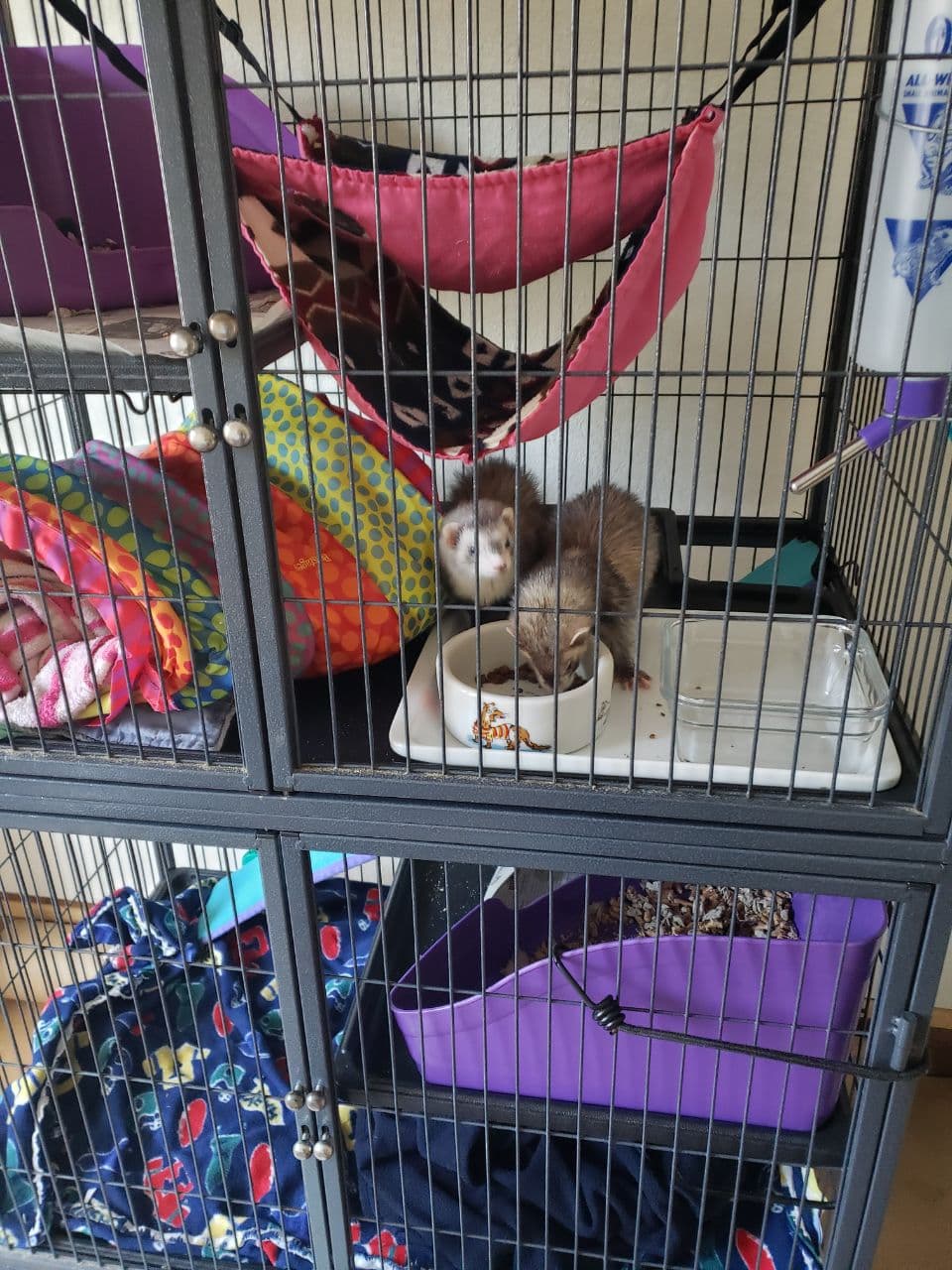
Yes—the powerful wolverine belongs to the same animal family as the little ferret sleeping in a hammock in someone’s living room.
That’s quite a family tree.
Will You Actually See a Weasel in the Sierra?
Possibly—but consider yourself lucky.
Weasels are quick, secretive and small enough to disappear into vegetation, rocks and burrows remarkably easily.
If you do see one, don’t attempt to approach or handle it.
Watch from a respectful distance and enjoy the encounter.
Wild weasels may resemble domestic ferrets, but they are very much wild predators, not pets.
Tiny Predators in a Giant Landscape
The Sierra Nevada is famous for its enormous scenery—granite peaks, towering forests, alpine lakes and deep winter snow.
It’s easy to overlook some of its smallest residents.
But somewhere among those rocks and meadows, a tiny long-tailed weasel may be searching for its next meal.
Higher in the mountains, an ermine may be almost invisible against the winter snow.
They’re fast.
They’re elusive.
They’re remarkably tough.
And for those of us who love ferrets, they’re a wonderful reminder that our mischievous little pets belong to one of the most fascinating families in the animal kingdom.
The next time your ferret races through a tunnel, disappears beneath a blanket or launches into a weasel war dance, you may be seeing just a tiny glimpse of that wild mustelid heritage.